Non Future Leaks technology in creating Astronomy based
forecast models
I would like to discuss here a tricky issue of "future leaks" phenomenon in astronomy based models.
The technology of creating an astronomy based model is described here: http://www.timingsolution.com/TS/Study/Class_Comp/class_comp_prelim.htm
This is a very powerful technique though you need to keep in mind things described below.
The general idea of this technique is: we collect the most important astro cycles and make the final forecast based on these cycles. The program allows to pick up the most important cycles automatically, this is a button to do it:
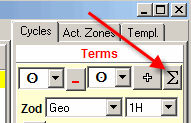
Here you will find the criteria for selecting the most power cycles:
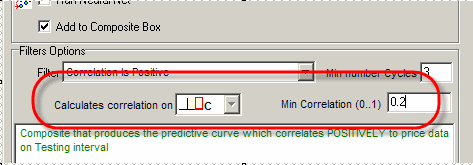
In this particular case, the program calculates the correlation between the astro cycle and the price ON C (TESTING) INTERVAL. If this correlation is high enough (higher than 0.2), the program selects it, otherwise it is disregarded.
Finally I got this projection line:
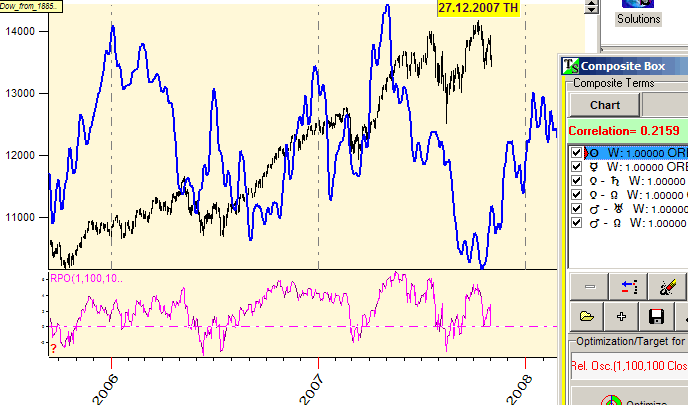
Now be careful!!! The program calculates a correlation on C interval:

This is C interval:
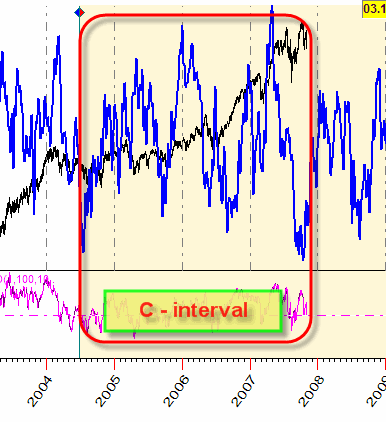
The trick is - we calculate the correlation on C interval and pick up the best cycles. In other words, the program picks up cycles that are good enough on C interval (which is AFTER LBC, i.e., "future"). So we
definitely get a good projection line for 2005-2008 yy - just because we have selected cycles this way. And we have a future
leak (because we look at this interval, calculate the correlation there and then
select there the cycles that provide the high correlation. There would be no
future leak if we select the cycles some other way and then just calculate the
correlation).
To conduct non future leaks cycle selection, we have to keep some amount of price history "untouched". We do not use this
piece of price history to calculate neither models nor correlation. We kind of do not know about this price history
while the process of making the forecast is not completed.
Thus we model the real trading process: we generate a forecast, make some decisions based on that forecast, then we see the results of these decisions when
the new price history comes.
In order to do this, you need to use one more interval, a VALIDATING interval. Set it through Main Window View (right mouse click->Main Window View):
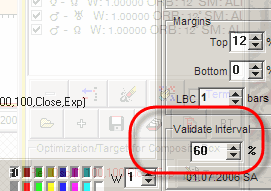
I set a validate interval to 60%.
Now we have three intervals:
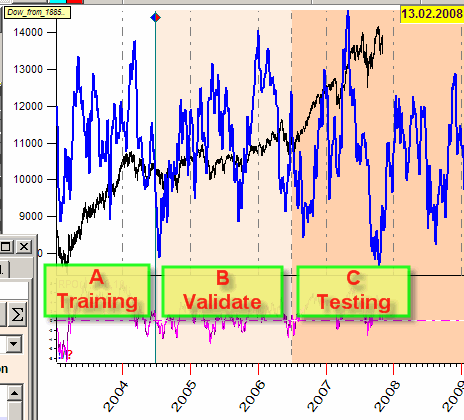
So, let us generate the projection line using non future leaks technology.
In Composite window, the program uses B interval to calculate the correlation
Let us look closer on what the program does now. Suppose we have downloaded
the price history from the year 1990. Set LBC in the middle of 2004; the
validate interval ends in the middle of 2006, as the picture above shows. Here
are all steps of this process:
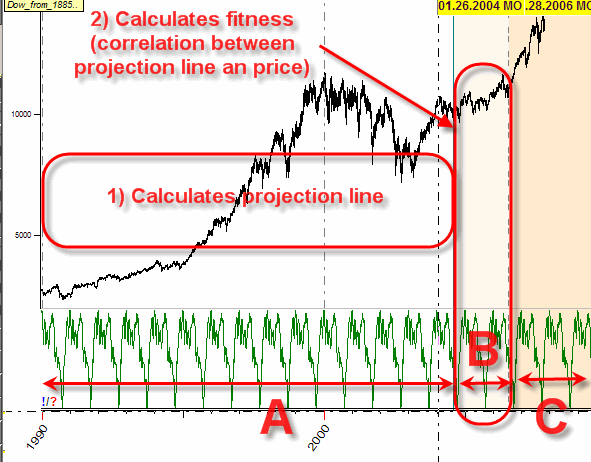
1) First of all the program calculates the projection line using A interval
(from 1990 to LBC in the middle of the year 2004). This projection line is
prolonged into the future after LBC. Surely the price history after LBC IS NOT
used to calculate the projection line.
2) Then we are interested to know how this projection line forecasts future
price movements. Now we focus our attention on B interval (between LBC in the
middle of 2004 and the middle of 2006). We use these two years of price history
data to figure out how our projection line works. If fitness is good enough
(i.e. correlation is high), the program puts this astro cycle into Composite
Box, otherwise the program disregards this cycle.
3) After several seconds of work, the program reveals the most important
cycles, and you get the projection line based on these cycles:
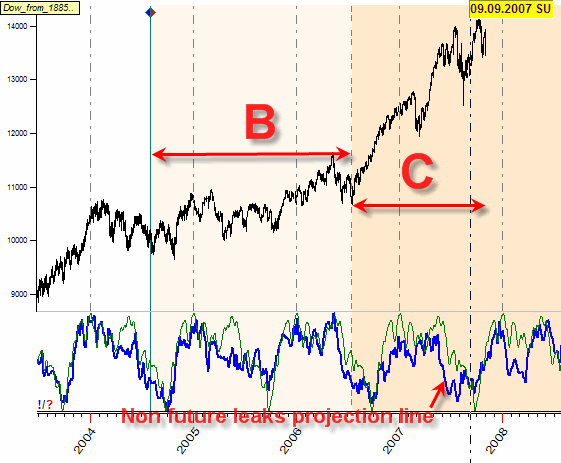
C interval is untouched, the program does not know about its existence. So we
can use the price history on C interval (after middle 2006) to figure out how
our model really works.
We cannot use for this purpose A interval, because it is used directly - the
projection line is adjusted to the price history on A interval. We cannot use
for this purpose B interval, because it is used indirectly, the program picks up
only those cycles that work well on B interval. But we did not use at all C
interval for our calculations. So C interval is a single independent witness
that can estimate the performance of our model. All other intervals, A and B,
have been involved in the process of generation of the projection line, they
have their "own interest" there.
Some recommendations:
1) How many price history it is necessary to download to calculate the
forecast? I have no the final answer on this question yet. It looks like 8-20
years price history is enough. But not less than 4 years.
2) What "Min correlation" is good? I think the program should pick
up 1-7 astro cycles. If you set the "min correlation" too big, the
program can find only one dominant cycle. This is OK. From the other side, if
the correlation is too low, we can get many cycles, I think this is not a good
practice. I believe the amount of playing cycles usually is not big.
So I recommend to vary this parameter, watch how many cycles the program
reveals. If this amount is too big or the projection line is not good, delete
all cycles in Composite Box:
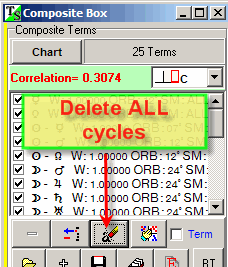
and repeat this procedure with another "min correlation" parameter.
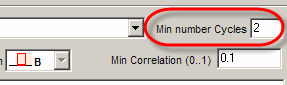
There is one more option there that I recommend to vary. This is the min amount of cycles used by the program to calculate the correlation: